
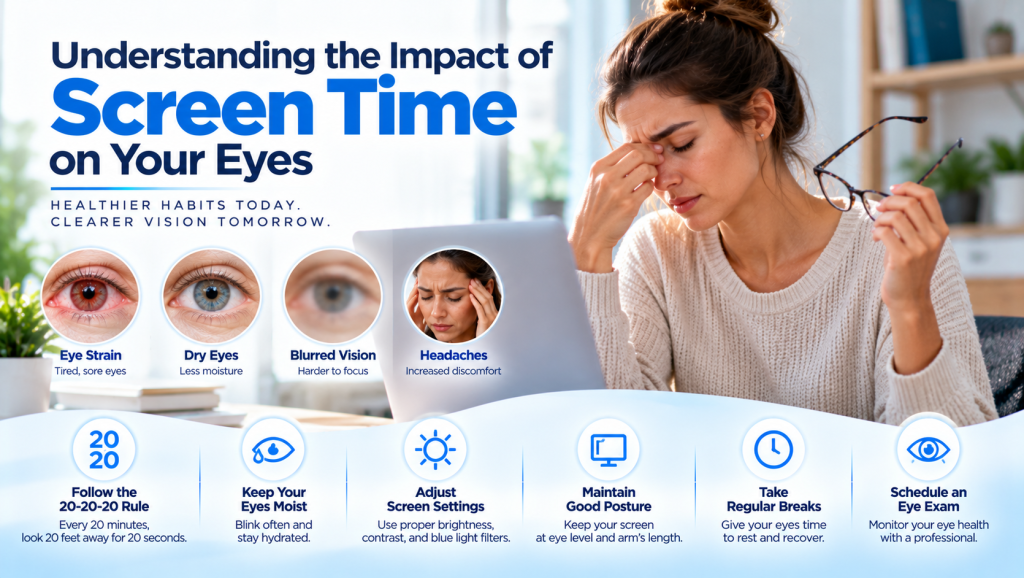
Digital eye strain, or computer vision syndrome, now impacts an estimated 60-69% of the U.S. population as daily screen time continues to rise. This condition arises from prolonged, uninterrupted focus on computers, smartphones, and tablets, which forces the eyes to work harder than they would during traditional reading tasks. While general discomfort is common, frequent symptoms such as dryness, blurred vision, and persistent headaches can indicate a need for proactive vision management.
When we look at digital screens, our natural blink rate drops by more than half, leading to significant ocular surface desiccation. Diamond Vision clinicians note that failing to address these environmental stressors can exacerbate underlying conditions like dry eye syndrome or undiagnosed refractive errors. Unlike generic advice that simply suggests walking away, our experts emphasize that consistent preventative habits, such as optimizing screen distance and lighting, are crucial for maintaining long-term ocular health.
Persistent visual fatigue should not be accepted as a normal part of your workday. If symptoms interfere with your daily life, scheduling a comprehensive eye exam allows professionals to rule out masked vision issues. By prioritizing expert-led care over temporary fixes, you ensure that your eyes remain healthy and comfortable throughout years of digital productivity.
Digital Eye Strain: Simple Daily Habits to Protect Your Vision
Identifying Digital Eye Strain Symptoms and Causes
Digital eye strain, or computer vision syndrome, refers to a collection of eye and vision-related issues stemming from prolonged interaction with digital displays like computers, smartphones, and tablets. Because viewing screens requires the eyes to engage in constant refocusing while processing text with lower contrast than printed material, the visual system experiences significant, cumulative stress per data from the NIH.
What is digital eye strain and what are its common symptoms? Most individuals report a range of discomforts, including eye fatigue, irritation, dryness, and light sensitivity, often accompanied by blurred vision. According to the Cleveland Clinic, symptoms also frequently extend to physical pain, such as stiffness in the neck, shoulders, and back, which is often tied to poor posture maintained while using digital devices. At Diamond Vision, we focus on restoring clarity for patients who struggle with these persistent symptoms, offering advanced surgical options for those whose vision needs correction beyond simple lifestyle adjustments.
A primary, yet often overlooked, cause of these symptoms is the dramatic reduction in natural blink rates. While humans normally blink 15 to 20 times per minute, research indicates this frequency drops by more than half when focusing on screens, leading to ocular surface dryness and a gritty sensation. While some seek to manage this with basic eye drops or blue-light blocking glasses, Harvard Health notes there is limited evidence for the efficacy of specialized lenses, emphasizing instead the importance of proper ergonomics and regular professional oversight. If you find that these symptoms persist despite adjusting your workstation, our team at Diamond Vision provides comprehensive diagnostic exams to identify underlying refractive errors that may be exacerbating your condition.
Managing Safety Concerns and Long-term Vision Impact
Digital eye strain, frequently categorized as computer vision syndrome, is generally not a dangerous medical condition. Current research from organizations like the Harvard Health indicates that while the condition causes significant, temporary discomfort, it does not lead to permanent damage to your vision. The symptoms, including dry eyes, blurred vision, headaches, and physical neck or shoulder pain, stem primarily from the high visual demands of sustained, uninterrupted screen focus.
Factors such as reduced blink rates, improper screen positioning, and uncorrected refractive errors frequently exacerbate these symptoms. While temporary relief can often be found through ergonomic adjustments, such as those recommended by experts at Stanford Redwood City, persistent visual changes that disrupt your daily quality of life warrant a deeper investigation by a qualified professional.
Regular eye examinations are essential because symptoms of eye fatigue may mask or worsen existing health issues, such as thyroid conditions or undiagnosed autoimmune diseases, as noted by Cedars-Sinai. Unlike generic retail eye clinics, Diamond Vision offers specialized refractive evaluations that assess whether your symptoms arise from simple strain or underlying concerns like astigmatism or presbyopia. If you find that your discomfort remains chronic despite workstation modifications, please schedule a consultation with one of our experienced ophthalmologists to prioritize your long-term eye health.
Implementing Effective Breaks Using the 20-20-20 Rule
The 20-20-20 rule is a practical strategy to help manage digital eye strain by encouraging frequent breaks from continuous screen focus. By looking at an object at least 20 feet away for 20 seconds every 20 minutes, you allow your eye muscles to relax and reset. This interval is significant because the ciliary muscles, which control the eye’s internal focus, begin to fatigue after approximately 20 minutes of intense near-work.
While some clinical perspectives regarding the rule’s long-term effectiveness remain mixed, it serves as a helpful reminder to blink more often. Because screen use causes blink rates to drop significantly, these breaks are essential for combating the dryness and irritation associated with prolonged digital interaction. Patients at Diamond Vision often find that incorporating these micro-breaks into their daily routine, rather than relying on a rigid timer, helps maintain tear film stability and overall ocular comfort.
Consistency is key to building these habits. You might consider using digital prompts or desktop alerts to remind yourself to shift your gaze away from your monitor. For those who still experience persistent symptoms like blurred vision, headaches, or significant eye fatigue, it is important to consult with an ophthalmologist to explore comprehensive care. We invite you to contact our expert team at Diamond Vision to discuss your specific vision health needs and the best strategies for maintaining clear, comfortable sight.
Optimizing Your Workspace for Ergonomic Comfort
Creating an ergonomic environment is one of the most effective ways to reduce digital eye strain and related physical discomforts like tech neck. At Diamond Vision, we emphasize that a well-configured workstation supports both your vision and your posture, preventing the need for compensatory leaning that exacerbates fatigue.
What are the best ergonomic practices for setting up your workstation to protect your vision?
To protect your vision, position your monitor at roughly an arm’s length, between 20 to 26 inches from your face. The top of the screen should sit at or slightly below eye level to maintain a comfortable downward gaze, which aligns with natural visual fields and encourages a healthier resting position for the eyelids.
Managing ambient lighting is equally vital to reducing glare. Place your screen perpendicular to windows to avoid harsh reflections, and rely on warm, adjustable task lighting rather than intense overhead fluorescent bulbs. If your setup remains uncomfortable despite these adjustments, an annual eye exam is recommended to ensure your prescription is optimized for the specific distances required by your digital workspace.
- Position the monitor 15 to 20 degrees below eye level to minimize the eye surface area exposed to air, which helps reduce dryness.
- Adjust your chair height so your feet remain flat on the floor, helping to stabilize your posture and reduce secondary neck and shoulder strain.
- Use an external keyboard and mouse if you work on a laptop to keep your screen at the proper height while keeping your arms supported.
- Consistently apply the 20-20-20 rule by shifting your focus to a point 20 feet away every 20 minutes for 20 seconds to allow your ciliary muscles to relax.
Recognizing When to Seek Professional Vision Care
While occasional eye fatigue from screen use or long days can often be managed with the 20-20-20 rule and improved ergonomics, persistent symptoms suggest a deeper issue. It is important to distinguish between simple, temporary tiredness and the potential need for clinical intervention.
How can patients distinguish between normal eye fatigue and the need for professional vision correction?
You should seek a professional evaluation if you experience chronic blurriness, frequent headaches, or discomfort that does not resolve with rest. While digital eye strain is often environmental, it can also mask or exacerbate underlying conditions such as astigmatism, farsightedness, or presbyopia. Unlike minor fatigue, these refractive errors require an updated prescription or corrective procedures to restore visual comfort.
Red flags requiring urgent medical attention include sudden vision loss, flashes, floaters, severe eye pain, or sensitivity to light combined with redness. These symptoms may indicate conditions such as dry eye syndrome or other complex eye health issues that require expert diagnosis. Comprehensive eye exams are the only way to accurately differentiate between temporary strain and a need for medical correction, such as the advanced options offered at Diamond Vision.
Many patients find that their symptoms significantly improve after a thorough assessment. Our team can help determine if your discomfort stems from lifestyle factors or refractive errors that may benefit from a more permanent solution.
Achieving Visual Clarity with Professional Guidance
Achieving sharp focus often starts with understanding your current ocular health. While standard 20/20 vision serves as a baseline for visual acuity, it does not account for the complexities of daily screen use or underlying refractive errors like astigmatism. Many patients experience symptoms of fatigue that persist even after adjusting their workspace, signaling a need for a professional evaluation.
At diamondvision.com, our experts look beyond basic thresholds to assess how your eyes perform under stress. Unlike common over-the-counter remedies, our clinical approach helps patients determine if their discomfort stems from manageable environmental factors or a condition that benefits from LASIK or other advanced corrective procedures. If your vision is failing to meet your needs, we invite you to request a free consultation today to explore personalized paths toward lasting clarity.
Contact Us
If you have more questions about LASIK procedures, get in touch with us.
Related Blogs

Understanding Your Vision Needs During Middle Age
As you enter your 40s, the natural aging process begins to affect the eye’s internal lens, which gradually loses the flexibility required to focus on

Embracing Innovation for Better Vision
Modern eye care is undergoing a significant transformation as digital tools and diagnostic accuracy redefine patient outcomes. Innovations like WaveLight® Plus allow surgeons to create

Restoring Clear Vision with Modern IOLs
An intraocular lens (IOL) is a tiny, artificial lens implanted in the eye to replace the natural lens when it becomes cloudy from cataracts. The
