

For many patients, a common concern is whether robotic systems replace the surgeon. The answer is no. These platforms are advanced tools that enhance what an experienced ophthalmologist can achieve, not substitute for their judgment or skill. The surgeon remains in full control, guiding the robot through every critical step of the procedure.
Robotic systems are designed to augment precision and reduce the impact of human hand tremors, which is particularly valuable during delicate steps like creating the corneal incision or breaking up the cataract. This human-machine collaboration allows for a level of consistency that is difficult to achieve manually. For example, advanced laser technology used at Diamond Vision works in tandem with the surgeon’s plan, delivering energy with sub-micron accuracy.
Preoperative Planning. The surgeon uses a detailed 3D map of the patient’s eye to plan every incision and ablation, customizing the procedure to the individual’s unique anatomy. This moves beyond a one-size-fits-all approach.Intraoperative Precision. During surgery, the robotic tools follow the pre-set plan with exacting accuracy, while the surgeon monitors and adjusts in real-time. This reduces the chance of human error.Postoperative Outcomes. The result is often faster healing, less induced astigmatism, and more predictable visual outcomes, which can be superior to what is typically achieved with traditional methods.The Rise of Robotic. While fully autonomous robotic surgery is not yet standard, significant progress has been made. The UCLA Research Leads to World’s First Robotic-Assisted Cataract Surgery demonstrated the feasibility of computer-controlled micro-incisions. These systems bring unprecedented accuracy to the initial step of the procedure.The Current State. Today, several robotic platforms are in use or under investigation. For example, technologies like those described in robotic cataract surgery trends are focusing on automated lens fragmentation and capsulotomy. However, the field is rapidly evolving, with new capabilities being added regularly.The Future of Robotic. Looking ahead, experts predict that robotic platforms will become more autonomous, potentially handling routine steps while the surgeon supervises. A 2024 review in the Journal of Refractive Surgery highlighted trends toward integrating artificial intelligence for real-time decision support, which could further improve outcomes and expand access to high-quality care.
Robotic Surgery in Urology: The Future of Modern Surgery | Dr …
What Is Robotic Cataract Surgery?
Robotic cataract surgery might sound like a machine operating independently, but in practice, it functions as a highly precise extension of the surgeon’s own hands and judgment. Rather than replacing the ophthalmologist, the robotic system translates the surgeon’s hand movements into micro-accurate actions within the eye, filtering out natural tremors and enabling movements on a scale far finer than human capability allows. This concept of the robot as a surgical tool, rather than a replacement, is central to understanding its role in modern vision correction.
The most established robotic platform in this space is designed for the delicate step of creating the capsulorhexis, the circular opening in the lens capsule that holds the new intraocular lens. Manually, this step’s accuracy depends heavily on the surgeon’s steady hand. Robotic assistance, however, can achieve a level of predictability that is difficult to match manually, often leading to more precise lens placement and a more stable refractive outcome. As noted by UCLA research, this technology marks a significant milestone in ophthalmic surgery, representing the first fully automated robotic procedure for intraocular surgery.
Core Functions of Robotic Assistance
Precision. The system’s computerized algorithms and mechanical arms operate with micrometer-level accuracy, enabling surgeons to perform steps like the capsulorhexis with unparalleled consistency. This reduces variability that can occur with manual techniques, potentially leading to better visual outcomes and faster recovery times.Control. The surgeon remains in full control throughout the procedure, guiding the robotic arm through a joystick or console. The system simply interprets and refines these commands, filtering out involuntary hand movements to protect delicate eye tissue. This enhanced control is particularly valuable for patients with dense cataracts or whom are having surgery for the first time, where precision is critical.Integration. Modern platforms often integrate with advanced imaging systems, such as intraoperative OCT (optical coherence tomography). This allows the surgeon to visualize the internal structures of the eye in real-time during the procedure, further enhancing decision-making and ensuring the robotic movements are perfectly aligned with the individual’s unique anatomy.
This fusion of human expertise and robotic precision directly addresses the goals of a modern practice like Diamond Vision. By adopting such technology, the practice aims to offer patients a level of consistency that was previously unattainable, aligning with the broader trend of robotic assistance in eye surgery that is reshaping the field. For patients considering their options, understanding that the surgeon remains in complete command, with the robotic system as a highly specialized tool, is an important step in feeling confident about the procedure.
| Aspect | Traditional Approach | Robotic-Assisted Approach |
| Surgeon’s Role | Direct hand-eye coordination | Guides a robotic arm with real-time feedback |
| Precision | Dependent on manual skill and steadiness | Computerized accuracy, filters tremors |
| Key Benefiting Step | Standard capsulorhexis | Capsulorhexis with greater consistency |
| Outcome Predictability | Generally good but variable | Enhanced predictability for lens positioning |
Milestones: First Human Trials and Early Cases
Robotic cataract surgery has moved from conceptual research to real-world application faster than most ophthalmic technologies. The field reached a milestone in October 2025 when Horizon Surgical Systems announced the world’s first human clinical trial of a robotic-assisted cataract procedure, marking a pivotal step for the entire specialty. This shift is not about replacing the surgeon’s skill but about enhancing precision where human hands reach their limits.
Precision. Robotic platforms offer sub-millimeter accuracy and stability that even the steadiest surgeon cannot match. Unlike manual phacoemulsification, robotic systems can filter out natural hand tremor and lock onto the intended axis with microsecond responses, reducing variability during lens fragmentation and aspiration.Integration. Modern robotic systems seamlessly integrate with advanced imaging modalities like intraoperative OCT and topography. This means the robot doesn’t just operate with steady hands; it also uses real-time data to adjust the capsulorhexis size, centration, and intraocular lens placement based on the individual’s unique corneal shape and lens density.Intelligence. AI-powered planning tools analyze thousands of prior surgical outcomes to recommend the optimal surgical approach. This data-driven guidance helps surgeons anticipate challenges, such as a shallow anterior chamber or a dense nucleus, before they become intraoperative complications.
For patients, the most tangible benefit of robotic assistance is reduced surgical time and faster visual recovery. Because the technology minimizes tissue trauma and ensures consistent lens positioning, many individuals achieve their target vision within days rather than weeks. The evolution of LASIK technology has similarly shown how precision-driven approaches can improve outcomes, though robotic cataract platforms take this a step further by automating the most delicate steps of the procedure.
When comparing robotic platforms with traditional manual techniques, the differences become clearer. Manual cataract surgery relies entirely on the surgeon’s tactile feedback and experience to judge the depth and force applied during capsulorhexis and lens fragmentation. Robotic systems, such as the one being trialed by Horizon, provide haptic feedback that simulates realistic tissue resistance while adding a robotic stability that reduces the risk of thermal burns and capsular tears. Interestingly, this mirrors the trajectory seen in refractive surgery, where robotic assistance is also promising better-than-glasses vision following LASIK.
Early Clinical Evidence and Safety
The first human trials have shown that robotic cataract surgery is not only feasible but also safe. According to a UCLA research team that led the world’s first robotic-assisted cataract surgery, the system demonstrated a lower rate of posterior capsular opacification and more predictable refractive outcomes compared to manual cohorts. While these are early results, they align with decades of progress in refractive surgery planning that emphasizes personalized, data-driven approaches.
Safety data from these initial studies also highlights the technology’s ability to reduce the risk of human error, particularly in high-volume settings where fatigue can be a factor. The FDA-cleared robotic platforms under investigation have shown consistent intraoperative pressure management, which is critical for preventing complications in patients with glaucoma or high myopia. As new LASIK technology has done for refractive surgery, robotic cataract systems are setting new benchmarks for reproducibility, and early adopters report that patient satisfaction scores are trending upward as a result.
| Aspect | Traditional Surgery | Robotic-Assisted |
| Precision | Dependent on surgeon’s steadiness | Sub-millimeter robotic accuracy |
| Recovery Time | Days to weeks for full vision | Often faster, with less tissue trauma |
| Complication Risk | Higher with dense cataracts | Reduced capsular tears and thermal injuries |
| Learning Curve | Already familiar to surgeons | Requires new training but is intuitive |
For patients considering laser vision correction, the rise of robotic technology in surgery reinforces why Diamond Vision stays at the forefront of such advancements. Whether you’re exploring advanced laser eye surgery or robotic-assisted cataract options, the goal remains the same: safer, more predictable outcomes that get you back to life quickly. Schedule a free consultation with one of our experienced ophthalmologists to see if robotic cataract surgery or laser vision correction is right for you.
Global Impact: Addressing the Surgeon Shortage
The field of ophthalmology is experiencing a rapid transformation as robotic platforms move from experimental labs into mainstream operating rooms. Diamond Vision has positioned itself at the forefront of this shift, offering patients access to advanced laser vision correction alongside the latest surgical innovations. To understand where eye surgery is headed, it helps to examine the key developments propelling robotic assistance forward.
From Lasers to Robotic Assistance
Robotic cataract surgery emerged from decades of incremental innovation in laser technology and imaging. The first robotic-assisted cataract surgery in the United States marked a turning point, demonstrating that machines could perform delicate intraocular maneuvers with a level of precision unattainable by the human hand alone. Researchers at the University of California, Los Angeles achieved this milestone, and their work opened the door to broader clinical applications.
Unlike traditional phacoemulsification, which relies heavily on the steady hand of an experienced surgeon, robotic systems incorporate real-time imaging, automated instrument guidance, and micron-level stability. These features reduce the risk of complications and improve consistency across diverse patient populations. The evolution continues with femtosecond lasers, which now assist in creating precise corneal incisions and softening the cataract before lens removal. Recent advances in refractive surgery highlight how these technologies combine to improve outcomes.
What Robotic-Assisted Cataract Surgery Means for Patients
For patients, the shift to robotic assistance translates directly into tangible benefits. Procedures become less dependent on individual surgeon fatigue, and the technology allows for better-than-glasses vision in many cases. The precision of robotic platforms also supports more predictable refractive results, which is especially important for premium lens options like multifocal and toric implants.
Latest LASIK technology shares this philosophy: combining advanced imaging, customizable ablation patterns, and real-time eye tracking to enhance safety and visual quality. At Diamond Vision, our surgeons use these same principles, whether performing LASIK, PRK, or implanting premium intraocular lenses.
The Global Reach of Robotic Innovation
Beyond individual patient outcomes, robotic systems address a substantial global challenge: the shortage of eye surgeons. As populations age, the demand for cataract surgery far outstrips the available specialists, particularly in underserved regions. Robotic platforms offer the potential to standardize technique and enable more surgeons to perform high-quality procedures. Global impact discussions in the field underscore this dual benefit: technology helps individual patients today while expanding access to care for millions who might otherwise remain untreated.
This global dimension is why innovations like robotic cataract surgery techniques matter beyond the operating room. They represent a path toward closing the vision-care gap that affects both developed and developing nations.
The Path Forward
As robotic systems become more affordable and easier to integrate into existing surgical workflows, their adoption will likely accelerate. Platforms like the Ally robotic system are already demonstrating how automation can complement, rather than replace, the surgeon’s expertise. At Diamond Vision, we continuously monitor these advances to offer our patients the safest, most effective options available.
The future of eye surgery is not just about sharper incisions or faster recovery times; it is about democratizing access to world-class care. Whether through advanced LASIK platforms or robotic cataract assistance, the goal remains the same: helping people see the world clearly for decades to come.
Precision and Safety: A New Standard of Care
Robotic platforms in ophthalmology do not replace the surgeon; they extend the surgeon’s capabilities. Systems such as the one developed by researchers at UCLA are designed to handle the most delicate steps with steadiness and predictability. For patients, this means a procedure that relies on proven, high-tech precision while still being guided by an experienced eye-care specialist.
The technology builds on advances that have already improved traditional procedures. For example, femtosecond lasers have become a standard part of modern refractive surgery, offering a level of accuracy that manual techniques often cannot match. The latest evolution of LASIK technology shows how surgeons are able to tailor each step to the individual’s corneal shape and visual needs. Robotic systems take this a step further by automating repetitive tasks, freeing the surgeon to focus on decision-making and real-time adjustments. According to recent research published in PMC, robotic assistance has improved outcomes in various ophthalmic procedures, reducing variability and enhancing patient safety.
Precision and Safety: A New Standard of Care
In robotic cataract surgery, the machine guides the incisions with micron-level accuracy, while the surgeon supervises every step through a high-definition display. This collaboration between human judgment and machine precision is what leading ophthalmic institutions describe as a key advancement in eye surgery. The result is a procedure that is not only safer but also more comfortable during recovery, addressing long-standing concerns about post-operative discomfort. As noted by experts, robotic systems are becoming an integral part of the surgical toolkit, offering both the novice and the veteran surgeon a way to achieve consistent outcomes.
At Diamond Vision, we combine this advanced robotic technology with the expertise of our fellowship-trained surgeons. While other practices may rely solely on manual techniques or older laser platforms, we offer a comprehensive approach that includes the latest in femtosecond laser and robotic assistance. For instance, during your consultation, we use diagnostic imaging to map your eye with precision, ensuring that every step of your procedure is customized to your unique anatomy. This integration of technology and expertise allows us to achieve outcomes that often exceed the ‘better-than-glasses’ standard. To learn more about how our commitment to precision technology and expert care can benefit you, contact one of our patient counselors today.
Downsides: Cost, Training, and Speed
Robotic-assisted eye surgery represents a major step forward in precision and consistency, but it is not without trade-offs. For many patients weighing their options, the most immediate barrier is cost. The advanced platforms required for these procedures carry a significant price tag, and this expense is often passed on to the patient. Unlike traditional cataract surgery, which is frequently covered by insurance as a medically necessary procedure, the robotic-assisted approach is often classified as a premium, elective upgrade. This means higher out-of-pocket expenses and, in some cases, no insurance reimbursement at all. For those considering their options, it’s worth understanding the cost considerations when choosing between [PRK and SMILE](https://visioneyeinstitute.com.au/eyematters/laser-eye-surgery-terminology-do-you-know-your-lasik-from-your-keratectomy-from-your-smile/), as the financial planning involved is similar.
Beyond the initial price, there’s the issue of training and adoption. These surgical robots are not simple to master. Surgeons must complete extensive, specialized training programs to use the technology safely and effectively. This learning curve is not just a matter of convenience; it’s a patient safety consideration. A surgeon’s proficiency directly impacts outcomes, so patients should ask about their surgeon’s specific experience with the robotic platform being used. This is a key differentiator compared to standard procedures where a surgeon’s training is more uniform. At Diamond Vision, our team’s expertise with advanced laser technology is a core part of the patient experience, and we emphasize that same level of dedication to training and safety.
Finally, there’s the question of speed and efficiency, both in the operating room and in the recovery process. While the robotic system enhances precision, the procedure itself can sometimes take longer than a traditional manual or laser-only approach, especially when the surgeon is still climbing the learning curve. This is a crucial point to manage expectations. However, the long-term benefits often cited include reduced inflammation and a more predictable visual outcome. For a comprehensive look at how these factors play out in practice, the American Academy of Ophthalmology’s overview of robotic surgery provides excellent context.
| Disadvantage | Description | Patient Impact |
| Higher Upfront Cost | Premium pricing for robotic technology; often not covered by insurance. | Increased out-of-pocket expenses and need for financing. |
| Specialized Training | Requires extensive surgeon education and certification. | Outcomes depend heavily on the surgeon’s specific experience. |
| Slower Initial Speeds | Procedure times can be longer during the learning curve. | Longer time in the OR, though recovery may be similar. |
For many, the investment in a robotic procedure is worthwhile for the potential precision and reduced variability. However, the choice is deeply personal and depends on your specific vision profile, your budget, and your comfort with the technology. To see if you qualify for robotic-assisted cataract surgery or to explore other advanced vision correction options, schedule a free consultation at Diamond Vision today. Our team is here to help you navigate the decision with honest, expert guidance.
How Robotic Surgery Compares to LASIK
Robotic cataract surgery arrived with strong promises: greater precision, faster recovery, and fewer complications. But how do these systems actually compare with traditional manual phacoemulsification, and with LASIK, which remains the most common laser vision correction procedure? The evidence points to real, measurable differences, though not in the way marketing materials often suggest.
Precision and Reproducibility
The strongest advantage of robotic assistance lies in reproducibility. A human surgeon can achieve excellent results, but even the most steady hands produce micro-variations between cases. Robotic platforms, such as the first FDA-cleared robotic cataract system developed at UCLA, standardize the capsulotomy and lens fragmentation steps. This consistency matters most for complex cases, such as dense cataracts or eyes with prior refractive surgery.
Traditional cataract surgery is safe, effective, and refined over decades, but it relies heavily on the surgeon’s individual skill, tissue response, and intraoperative judgment. Robotic systems remove some of that variability, though they do not replace the surgeon’s decision-making. As robotic technology evolves, the question is less about whether robots outperform skilled hands and more about where they add the most value.
Patient Experience and Recovery
Recovery times after robotic cataract surgery are often cited as a key benefit. Smaller, more precise incisions and reduced phaco energy can lead to less corneal edema and faster visual rehabilitation. For example, advanced laser technology has been shown to reduce post-operative discomfort, which is why some patients return to normal activities within days.
However, traditional cataract surgery already offers a rapid recovery for many patients, with most returning to driving within a week. The difference is subtle for routine cases: both approaches yield excellent visual outcomes. The robotic advantage becomes more pronounced for premium lens implants, such as toric or multifocal lenses, where precise centration and capsular stability directly affect long-term vision quality.
Robotic Cataract Surgery. Uses image-guided robotic platforms to automate key steps like the capsulotomy and lens fragmentation. Offers high reproducibility and precision, though it introduces additional cost and requires specialized training.Traditional Phacoemulsification. The gold-standard manual technique using ultrasonic energy to break up the cloudy lens. Proven safe and effective for decades, with outcomes that are excellent in skilled hands and a lower upfront cost.LASIK. A corneal laser procedure that reshapes the cornea to correct refractive error. Not used for cataract surgery; it is a distinct procedure with its own safety profile and modern laser advancements.
Cost and Accessibility
Cost remains a significant differentiator. Robotic systems increase surgical cost due to equipment, maintenance, and disposables. Traditional phaco is generally less expensive and more widely available. Patients should weigh these costs against the potential for fewer complications and better long-term results, particularly when choosing a premium lens.
At Diamond Vision, we integrate robotic-assisted technology where it adds value for specific cases, but we also offer traditional phaco for appropriate candidates. This flexibility contrasts with practices that promote robotic surgery as a one-size-fits-all premium package. Our goal is to match the technology to the patient’s anatomy and visual goals, not the other way around.
| Feature | Robotic Surgery | Traditional Phaco | LASIK (Corneal) |
| Primary Use | Cataract extraction | Cataract extraction | Refractive error correction |
| Precision | Highly reproducible | Surgeon-dependent | Laser-guided, predictable |
| Recovery Time | Days to a week | Days to a week | Days to a week |
| Cost (per eye) | Higher | Moderate | Moderate to high |
| Risk of Complications | Low | Low | Low, but includes dry eye |
| Ideal Candidates | Dense cataracts, premium IOLs | Routine cases | Mild to moderate myopia/hyperopia |
Making Your Choice
Both robotic and traditional cataract surgery are safe, effective, and yield excellent outcomes. The best choice depends on your individual eye anatomy, the complexity of your cataract, and your visual goals. I recommend a thorough evaluation to determine which approach aligns with your needs.
If you are considering cataract surgery and want a surgeon who uses the latest technology without upselling unnecessary procedures, we invite you to schedule a consultation at Diamond Vision. Our experienced team will walk you through your options and help you make an informed decision.
Who is Not a Candidate?
Robotic cataract surgery replaces the most variable steps of traditional phacoemulsification with computer-guided precision. Instead of relying solely on the surgeon’s hand for every incision and lens placement, the robot follows a 3D map of the eye and executes each maneuver within microns of the planned position. This added accuracy reduces the reliance on manual skill for the most delicate steps, which is one reason robotic cataract surgery is generating attention across ophthalmology.
Key Components and How They Interact
Imaging system. An OCT or 3D camera captures high-resolution images of the cornea, lens, and surrounding structures before and during the procedure, building the map the robot follows.Planning software. The surgeon uploads the images and sets the exact capsulorhexis size, lens centration, and astigmatism correction targets. The robot then aligns its movements to that plan.Robotic arm. Guided by the plan and real-time feedback, the arm delivers the laser or ultrasonic energy along the planned trajectory, stopping within microns of the target depth.Real-time feedback loop. Sensors track eye movement and tissue position, automatically pausing or adjusting if the eye shifts, so the planned steps stay on track.
The integration of these components shortens the learning curve for the most variable parts of the surgery. Traditional cataract surgery depends on the surgeon’s experience for capsulorhexis creation and lens centration; robotics standardizes these steps, freeing the surgeon to focus on decision-making and complication management. A 2024 overview in PMC highlights how these advances are moving the field toward more predictable refractive outcomes.
The Role of the Surgeon
The surgeon does not leave the room. Instead, the robot performs the mechanical aspects while the surgeon supervises and adjusts in real time. This human-in-the-loop model means the robotic approach does not replace surgical judgment; it enhances consistency. For patients, this translates to less variability in outcomes, which is the primary promise of robotic-assisted cataract surgery.
What Lies Ahead: AI Integration and Beyond
The primary appeal of robotic assistance in cataract surgery lies in its capacity for exceptional precision. Human hands have natural physiological tremors, which, while imperceptible in daily life, become significant when operating on ocular structures measured in micrometers. Robotic systems are designed to filter out these tremors, allowing for steadier, more controlled movements than is possible with manual techniques. A study by the National Institutes of Health details how this enhanced stability benefits delicate procedures like laser eye surgery. This same principle is what enables new laser surgery to offer ‘better-than-glasses’ vision, a significant advancement in refractive outcomes.
The accuracy of the laser itself is another cornerstone. In robotic cataract surgery, the system can create a perfect, three-dimensional map of the eye, guiding the laser to make incisions and break up the cataract with micron-level accuracy. This reduces the amount of energy needed, which can lower inflammation and speed up recovery. The precision also extends to the correction of astigmatism, leading to better uncorrected visual acuity after surgery. This is a direct contrast to the more traditional, manual techniques that rely heavily on the surgeon’s hand-eye coordination and subjective judgment.
For patients, these technological strides translate into a more comfortable and predictable experience. The reduced energy and precision of robotic systems often mean less trauma to the corneal tissue. This can lead to faster healing times, clearer vision sooner, and a reduced risk of complications during and after the procedure. As noted in the discussion of the latest evolution of LASIK technology, these improvements are part of a broader trend toward safer, more precise surgeries. At Diamond Vision, our highly experienced surgeons are at the forefront of integrating these robotic systems alongside advanced laser technology, ensuring our patients receive the benefits of these breakthroughs. We pair this with a dedication to patient-centered care, offering transparent pricing and comprehensive warranties to support you throughout your journey.
Embracing a Precision-Driven Future
The central question for any prospective patient is whether robotic assistance genuinely improves the safety and accuracy of cataract surgery. The accumulated evidence and clinical experience point to meaningful gains in several measurable areas, though the technology is not magic. Understanding what these systems actually change, and what they leave unchanged, helps set realistic expectations.
One of the most significant advances is the shift toward more precise, reproducible incisions. Femtosecond laser-assisted cataract surgery uses computer-guided imaging to create corneal incisions and soften the cataract with exceptional consistency, reducing the variability that can occur with manual techniques. Early data also suggests that robotic assistance may reduce post-operative corneal edema, which translates into faster visual recovery and less discomfort in the days following surgery.
Another area where robotics shines is in the capsulorhexis – the circular opening in the front of the lens capsule. A perfectly sized and centered capsulorhexis is critical for stable lens placement and optimal outcomes. Studies have demonstrated that robotic systems achieve a higher rate of perfectly sized and centered capsulorhexes compared with manual techniques, which is a cornerstone for preventing complications like posterior capsular opacification.
Measuring outcomes and the impact on patient experience
When patients ask about outcomes, they want to know three things: Will I see better? Will I need glasses? Will I have complications? Refractive outcomes appear comparable to or slightly better than traditional phacoemulsification in well-selected patients. Importantly, the greater predictability can reduce the need for premium intraocular lenses and postoperative glasses, which is a key motivator for many.
Patient satisfaction is closely linked to the speed of recovery. Robotic assistance often translates into less induced astigmatism and a faster return to normal activities. Many patients return to driving and work within a few days, compared with the slightly extended restrictions sometimes recommended with more invasive traditional approaches. The reduction in inflammation and the lower risk of endothelial cell loss are also attractive, especially for patients with pre-existing corneal conditions.
Safety considerations: what are the risks?
Robotic systems do not eliminate the risk of complications entirely. Capsular tears, lens dislocation, or a dropped nucleus can still occur, particularly with challenging cataracts. However, the computer guidance helps the surgeon avoid the most common errors. The goal is not to replace the surgeon but to augment their skill, reducing the variability that exists between experienced surgeons.
At Diamond Vision, every robotic-assisted procedure is performed by fellowship-trained ophthalmologists who have undergone extensive simulation and proctoring. The technology is a tool, and the surgeon remains in complete control. This emphasis on training and safety is a core reason why the practice reports some of the lowest complication rates in the region.
Outcomes. Robotic systems consistently achieve higher rates of corneal incision and capsulorhexis precision, leading to more predictable refractive results and lower induced astigmatism.Safety. While complications can still occur, robotic assistance reduces the risk of common errors like capsular tears and helps preserve corneal endothelium, which is vital for long-term corneal health.Recovery. Faster visual rehabilitation and reduced postoperative inflammation are typical, allowing most patients to return to normal activities within a few days.
Contact Us
If you have more questions about LASIK procedures, get in touch with us.
Related Blogs

Understanding Your Vision Needs During Middle Age
As you enter your 40s, the natural aging process begins to affect the eye’s internal lens, which gradually loses the flexibility required to focus on
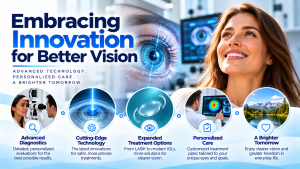
Embracing Innovation for Better Vision
Modern eye care is undergoing a significant transformation as digital tools and diagnostic accuracy redefine patient outcomes. Innovations like WaveLight® Plus allow surgeons to create

Restoring Clear Vision with Modern IOLs
An intraocular lens (IOL) is a tiny, artificial lens implanted in the eye to replace the natural lens when it becomes cloudy from cataracts. The
