
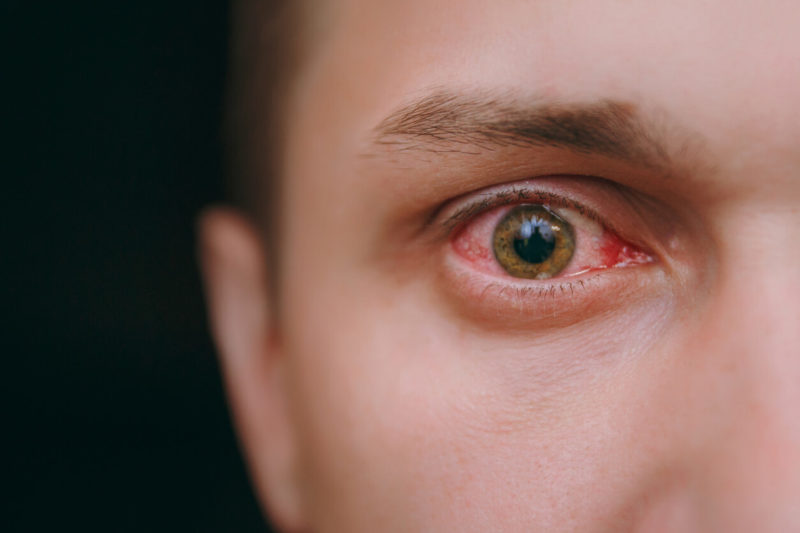
Pink eye contagiousness in Manhattan, NYC depends on type: viral conjunctivitis is contagious for 10 to 14 days from onset, while bacterial pink eye is contagious until 24 hours after antibiotic treatment begins. Allergic conjunctivitis is not contagious. How long pink eye stays contagious also depends on hygiene practices such as handwashing and avoiding shared items. Diamond Vision’s Manhattan and Paramus eye doctors diagnose all forms of conjunctivitis. Schedule an eye exam at Diamond Vision by calling (212) 838-2020.
Pink eye — medically known as conjunctivitis — is one of the most common eye conditions in the United States, affecting millions of Americans every year across all age groups. In New York City and the greater metropolitan area, where densely populated schools, offices, public transit, and shared spaces create ideal conditions for infectious spread, conjunctivitis outbreaks are a year-round reality. One of the most urgent questions for anyone who has pink eye — or who lives or works with someone who does — is: how long is pink eye contagious? The answer, as with many medical questions, depends critically on which type of conjunctivitis is involved. Not all pink eye is contagious, and among the types that are, the duration of contagiousness varies significantly by cause and treatment. At Diamond Vision, with leading eye care practices in Manhattan NYC and Paramus NJ, we want patients and their families to have accurate, actionable information about conjunctivitis so they can make informed decisions about school, work, and social activities during an infection.
What Are the Three Types of Pink Eye and How Contagious Is Each? NYC Eye Doctor Explains
Conjunctivitis falls into three broad categories based on its cause, and understanding the distinctions is essential for managing transmission effectively. Viral conjunctivitis is the most contagious form of pink eye and the most common type overall in adults, accounting for approximately 80 percent of cases. It is caused predominantly by adenoviruses — the same viruses responsible for the common cold — though herpes simplex virus (HSV), enterovirus 70, and coxsackievirus A24 also cause viral conjunctivitis. Viral conjunctivitis spreads readily through direct contact with infectious secretions (touching the eye and then touching another person or surface), through respiratory droplets from sneezing or coughing (with adenoviruses), and through contact with contaminated fomites — shared towels, pillowcases, contact lens cases, makeup applicators, door handles, or computer keyboards. Viral conjunctivitis has no specific cure and must run its natural course. It remains contagious from the moment symptoms appear until symptoms have fully resolved — typically 10 to 14 days for most adenoviral conjunctivitis, though some strains can cause symptoms lasting up to three weeks. Epidemic keratoconjunctivitis (EKC), caused by specific adenovirus strains (serotypes 8, 19, and 37), is particularly severe and contagious, sometimes causing painful corneal subepithelial infiltrates that persist for months. Bacterial conjunctivitis is typically less contagious than viral conjunctivitis in otherwise healthy adults but still spreads readily in close-contact settings. It is caused most commonly by Staphylococcus aureus (in adults), Haemophilus influenzae, and Streptococcus pneumoniae (more common in children). The defining characteristic of bacterial conjunctivitis is its thick mucopurulent (yellow-green) discharge, often causing the lids to be stuck together upon waking. It spreads through direct contact with eye discharge and contaminated objects. The most critical practical point: antibiotic eye drops dramatically reduce the contagious period of bacterial conjunctivitis. Patients started on appropriate topical antibiotics (erythromycin, polymyxin B/trimethoprim, or azithromycin ophthalmic) become non-contagious within 24 hours of initiating treatment and typically achieve complete symptom resolution within five to seven days. Without antibiotics, bacterial conjunctivitis may remain contagious for as long as active discharge is present. Allergic conjunctivitis is not contagious at all. It is caused by the immune system’s inflammatory response to allergens — pollen, dust mites, pet dander, mold spores, contact lens solution preservatives, or other irritants — rather than by any infectious agent. You cannot catch allergic conjunctivitis from another person, and people with allergic conjunctivitis do not need to isolate or stay home for infection control purposes.
How Long Is Viral Pink Eye Contagious? Day-by-Day Timeline for Manhattan, NYC Patients
Understanding the typical progression of viral conjunctivitis helps patients and caregivers plan effectively. Day 1 to 2: the infection is often in an incubation phase. With adenovirus, the incubation period is typically five to twelve days from exposure to symptom onset — meaning a person can be infected for nearly two weeks before developing symptoms, during which time they may be pre-contagious without knowing it. Day 1 of symptoms: redness, watering, and discomfort typically begin in one eye. At this point, the infection is fully contagious. Days 2 to 5: symptoms typically peak, with maximum redness, discharge, and discomfort. The second eye is often affected during this period. This is the period of highest contagiousness. Days 5 to 10: symptoms begin to gradually improve in most patients with typical adenoviral conjunctivitis. The infection remains contagious. Days 10 to 14 (or later): most patients have substantially improved or resolved symptoms. Contagiousness ends when all active secretions have stopped and redness has fully resolved. For EKC caused by the more aggressive adenovirus strains, symptoms may persist for three to four weeks, and corneal involvement (sensitivity to light, blurred vision) may persist for months even after the infectious phase has ended.
How Does Pink Eye Spread and How Can New York Patients Stop Transmission?
Pink eye spreads through two primary routes: direct contact (touching infected eye secretions and then touching another person’s eye, mouth, or mucous membranes) and indirect contact via fomites (contaminated surfaces or shared objects). Viral conjunctivitis-causing adenoviruses are remarkably robust pathogens that can survive on hard surfaces for up to 49 days under optimal conditions — which is why outbreaks in schools, daycares, offices, and households can be so persistent and difficult to contain. Effective transmission prevention requires meticulous hand hygiene — washing hands frequently with soap and water for at least 20 seconds, particularly after touching the face or eye area; not touching the infected eye unnecessarily; avoiding touching door handles, keyboards, and other shared surfaces after touching the eye; not sharing towels, pillowcases, washcloths, contact lens cases, or any item that contacts the eye area; changing and laundering pillowcases and towels daily during active infection; cleaning high-touch surfaces (door handles, keyboards, phone screens, remote controls) with appropriate disinfectants; and avoiding touching the eyes, nose, and mouth with unwashed hands — a practice that is central to preventing transmission of virtually all respiratory and ocular viruses.
When Can Manhattan, NYC Students and Workers Return After a Pink Eye Diagnosis?
This is one of the most practically important questions for patients and is handled differently by different institutions. For children in schools and daycare settings, most institutions follow guidance that children with infectious conjunctivitis should remain home until 24 hours after initiating antibiotic treatment (for bacterial pink eye) or until all discharge and active symptoms have resolved (for viral pink eye, which does not respond to antibiotics). For adults in office and professional settings, similar principles apply: those with bacterial conjunctivitis can typically return to work 24 hours after starting antibiotic treatment; those with viral conjunctivitis should ideally remain home or work remotely until symptoms have fully resolved — though this may not always be practical for a condition that can last two weeks. Healthcare workers, food handlers, and others in high-risk transmission roles should follow their institutional infection control protocols, which typically require complete resolution of all symptoms before returning to patient or food contact work. In practice, the key decision points are: is discharge (the primary vehicle of transmission) still present? If yes, the person is likely still contagious. Have all symptoms fully resolved? If yes, transmission risk is substantially reduced.
Does Pink Eye Treatment Reduce Contagiousness Faster? What NYC Eye Doctors Recommend
Treatment approach has a direct impact on the duration of contagiousness, which makes accurate diagnosis of conjunctivitis type critically important. Viral conjunctivitis: no antibiotic treatment is effective. Management focuses on symptomatic relief — cold compresses, preservative-free artificial tears, and in some cases antihistamine or decongestant eye drops for comfort. The infection runs its natural course. Antiviral therapy (topical ganciclovir or trifluridine) is reserved for HSV conjunctivitis specifically. Bacterial conjunctivitis: antibiotic eye drops or ointment (polymyxin B/trimethoprim, azithromycin, or erythromycin) initiated promptly dramatically shorten both the symptomatic period and the contagious period. Patients typically become non-contagious within 24 hours. This is a clinically important reason to obtain an accurate diagnosis — bacterial conjunctivitis benefits significantly from antibiotic treatment, while viral conjunctivitis does not, and prescribing antibiotics for viral pink eye contributes to antimicrobial resistance without benefit. Allergic conjunctivitis: antihistamine eye drops (ketotifen, olopatadine), mast cell stabilizers, and avoidance of the causative allergen are the treatment mainstays. No infection control measures are needed as the condition is not transmissible.
FAQs: How Long Is Pink Eye Contagious? Pink Eye Duration and Care in Manhattan, NYC
Can you get pink eye twice?
Yes. Pink eye can recur, particularly viral conjunctivitis, because immunity after adenoviral conjunctivitis is typically serotype-specific — protecting against the specific strain you were infected with but not against other strains. Bacterial conjunctivitis can also recur, particularly in people with underlying blepharitis or chronic eyelid margin disease that predisposes to repeated bacterial colonization.
Is pink eye contagious before symptoms appear?
There is a pre-symptomatic contagious period for some forms of viral conjunctivitis, though it is less certain than the symptomatic phase. Adenovirus has an incubation period of 5 to 12 days during which the virus is replicating, and some evidence suggests low-level shedding may begin before symptoms are apparent. For practical purposes, contagiousness should be assumed from the time symptoms first appear.
Can my pet give me pink eye?
The species-specific nature of most conjunctivitis-causing viruses and bacteria means that transmission between humans and pets is uncommon. Chlamydia psittaci from birds and certain animal pathogens can cause human conjunctivitis in rare cases, particularly in veterinary workers or those with heavy bird exposure. The common causes of human pink eye are not typically acquired from domestic pets.
Can Diamond Vision diagnose and treat pink eye in Manhattan NYC?
Yes. Diamond Vision provides evaluation and management of conjunctivitis at our Manhattan NYC and Paramus NJ locations, including accurate diagnosis of viral vs. bacterial vs. allergic etiology and appropriate treatment recommendations. Call (212) 838-2020 or visit diamondvision.com/schedule-eye-exam/.
📍 Diamond Vision — Manhattan NYC: (212) 838-2020 | Paramus NJ: (332) 233-9803 | Free LASIK consultations at all 10 locations — diamondvision.com/schedule-eye-exam/
Contact Us
If you have more questions about LASIK procedures, get in touch with us.
Related Blogs

Can PRK Correct a High Prescription in Manhattan, NYC
PRK in Manhattan, NYC can correct high myopia, hyperopia, and astigmatism within certain limits that are determined by each patient’s corneal thickness and overall ocular

PRK for Athletes in Paramus, NJ: Why Consider Flap-Free Laser Eye Surgery
Athletes in Paramus, NJ who participate in contact sports or physically demanding activities often choose PRK over LASIK because PRK does not create a corneal

PRK for Thin Corneas in Manhattan, NYC: Who May Be a Candidate
PRK in Manhattan, NYC is the recommended laser vision correction procedure for patients whose corneas are too thin for LASIK. Unlike LASIK, PRK does not
