

Achieving lasting visual freedom is a personal journey, and modern refractive surgery offers multiple effective ways to reduce your daily dependence on glasses and contact lenses. At Diamond Vision, we focus on matching your unique eye anatomy with the surgical approach that delivers the safest and most precise results.
The evolution of refractive surgery has moved well beyond a one-size-fits-all model. While many patients are familiar with laser-based procedures like LASIK, which permanently reshapes the cornea, other options such as the EVO ICL provide a powerful, additive alternative. This specialized lens technology is often an ideal solution for patients with thin corneas or high refractive errors who might not qualify for standard laser treatments.
Because every eye is different, a professional evaluation remains the most important step in your treatment plan. Our ophthalmologists perform comprehensive screenings to assess your corneal thickness, eye health, and prescription stability. Whether you are considering our EVO ICL vs LASIK options, we prioritize an educational approach that explains why a specific procedure fits your lifestyle needs and ocular anatomy better than others.
Understanding your candidacy is the first step toward clearer vision. We invite you to schedule a free consultation with our team to discuss your goals, review your options, and determine the right path for your long-term success.
What is the difference between EVO ICL and LASIK?
Understanding Fundamental Differences in Vision Correction
Achieving lasting visual clarity often involves choosing between two primary surgical methods, each with distinct mechanical approaches to correcting refractive errors. While both procedures aim to reduce your daily dependence on glasses or contact lenses, the underlying techniques differ significantly in how they interact with your ocular anatomy.
What are the primary differences between LASIK and EVO ICL for vision correction?
LASIK functions by using a laser to create a microscopic flap in the cornea before reshaping the underlying tissue to adjust how light enters the eye. Because this process removes a small portion of corneal tissue, it is considered a permanent structural change. Conversely, the EVO ICL procedure is an additive approach. It involves placing a biocompatible, ultra-thin lens behind the iris and in front of the natural lens. Because it does not require tissue removal, it preserves the natural structure of the cornea, making it a preferred choice for patients who may not meet the thickness requirements for laser-based procedures.
A notable benefit of the EVO ICL approach is its reversibility. Since the lens is positioned rather than fused, it can be removed or replaced by a surgeon if your visual needs evolve. In contrast, LASIK is non-reversible. Furthermore, because the lens procedure does not affect the corneal surface, it is often favored for patients concerned about dry eye symptoms, which can sometimes be exacerbated by the nerve interactions involved in laser-based reshaping.
At Diamond Vision, our specialists emphasize that identifying the optimal path for your eyes depends on individual factors such as corneal topography, prescription strength, and lifestyle goals. While LASIK remains a frequent recommendation for mild to moderate myopia, patients with higher prescriptions or specific anatomical constraints often find superior results with EVO ICL. We invite you to explore your options during a consultation to determine which technology best matches your vision objectives.
Comparing LASIK PRK and EVO ICL Procedures
Selecting the right vision correction procedure begins with understanding the distinct surgical techniques used to achieve clarity. LASIK, PRK, and the EVO ICL each offer unique benefits based on your specific eye anatomy and refractive needs.
How do LASIK, PRK, and ICL compare in terms of procedure and candidacy?
LASIK and PRK are both laser refractive surgeries that reshape the cornea to correct vision, but they differ in their approach. LASIK involves creating a thin corneal flap, while PRK involves removing the surface layer of the cornea, which then heals naturally. The EVO ICL is an additive, reversible procedure that implants a biocompatible lens behind the iris rather than altering corneal tissue. At diamondvision.com, our specialists often recommend PRK for patients with thinner corneas or more active lifestyles who may not qualify for a flap-based approach.
The EVO ICL is frequently the preferred solution for patients who are not candidates for laser surgery due to high refractive errors, severe dry eye, or thin corneas. Unlike procedures that rely on tissue removal, this additive technology preserves the natural structure of the eye. Because the EVO ICL is fully reversible, it provides a unique level of flexibility that permanent laser reshaping cannot offer.
Determining your best path forward requires a professional evaluation. Am I a Good Candidate for ICLs? is a question often addressed during a comprehensive eye exam, where measurements of your anterior chamber depth and corneal health are taken. Whether you choose the precision of laser-assisted corneal reshaping or the additive benefits of an implantable lens, diamondvision.com can help you weigh these options against your individual vision goals.
Correcting Astigmatism with Specialized Technologies
Effective vision correction for astigmatism depends on whether a procedure modifies the cornea or utilizes an additive lens technology. Both LASIK and EVO ICL are proven to correct astigmatism, though they reach that outcome through distinct surgical pathways.
How does EVO ICL address astigmatism compared to LASIK?
LASIK is a laser-based surgery that permanently reshapes the cornea to address refractive errors by smoothing out its curvature. At diamondvision.com, we recognize that while this is effective for many, it is not the only path to clarity. In contrast, the EVO Toric ICL involves the surgical placement of a specialized, biocompatible lens inside the eye. This lens sits in front of the natural lens to correct astigmatism without removing or altering corneal tissue. This makes EVO ICL a particularly attractive option for patients who may not be ideal candidates for LASIK due to thin corneas, high prescriptions, or chronic dry eye.
Because the EVO ICL is additive and theoretically reversible, it offers a distinct alternative for those seeking vision correction that leaves the structure of the cornea untouched. While competitors often rely solely on laser tissue removal, diamondvision.com provides advanced lens-based solutions to accommodate patients with diverse anatomical requirements. We invite you to schedule a free consultation with our experienced ophthalmologists to determine which technology is best suited for your unique visual needs.
Evaluating Long Term Outcomes and Risk Profiles
When assessing vision correction longevity, it is essential to distinguish between procedures that alter the corneal surface and those that function as an internal lens solution. LASIK permanently reshapes the cornea using laser-assisted tissue removal, whereas EVO ICL adds a biocompatible lens behind the iris to correct vision without removing corneal tissue. Because the natural lens remains in place during an EVO ICL procedure, it preserves the eye’s natural structural anatomy.
What should patients consider regarding the long-term outcomes and potential risks of ICL versus LASIK?
Clinical data supports the long-term efficacy of these procedures. For instance, Refractive Surgery Council findings indicate that serious, sight-threatening complications from ICL surgery are extremely rare, affecting less than 1 percent of patients. While LASIK recovery is often faster, the procedure can sometimes exacerbate dry eye symptoms due to the creation of a corneal flap. In contrast, EVO ICL does not interact with corneal nerves, making it a choice that patients concerned about dry eye or with specific corneal thickness requirements often consider.
Understanding your risk profile is vital for successful results. LASIK involves permanent structural changes, while the EVO ICL is unique for its reversibility, allowing specialists to remove or replace the lens if needs change later in life. Long-term ocular health requires monitoring for risks such as infection, intraocular pressure, or cataract development, which are factors our specialists carefully review during initial screenings. Diamond Vision ophthalmologists support a personalized approach, using comprehensive mapping of your corneal and intraocular anatomy to help you weigh these factors. We invite you to book a free consultation to discuss which path best aligns with your long-term vision goals.
Understanding Candidacy Age and Stability Requirements
Achieving lasting visual clarity requires more than just selecting a procedure. It depends on a careful assessment of your ocular anatomy and long-term vision stability. Whether you are considering LASIK or other corrective options, our specialists at diamondvision.com prioritize your safety by ensuring you meet specific clinical benchmarks before any intervention.
Are there specific age limits or criteria for undergoing EVO ICL surgery?
EVO ICL surgery is currently approved for individuals between the ages of 21 and 60 who are seeking correction for nearsightedness or astigmatism, per Refractive Surgery Council data. In addition to meeting these age requirements, patients must demonstrate a stable refractive error, meaning their vision prescription has remained consistent for at least one year. This procedure is an excellent option for many, including those who may not be suitable candidates for LASIK due to thin corneas or high myopia.
Because every patient’s eyes are unique, a comprehensive clinical evaluation by our expert ophthalmologists is essential to confirm your candidacy. We invite you to schedule a free consultation with our team to discuss your specific vision needs and determine if this technology is the right choice for you. Our experts utilize detailed diagnostic imaging to ensure that your refractive error requirements are fully met before moving forward with any surgical plan.
Financial Considerations and Investing in Your Sight
Selecting the right vision correction procedure involves balancing long term visual goals with your current financial situation. While LASIK is frequently more affordable due to its established nature, procedures such as EVO ICL often carry a higher upfront cost, reflecting the specialized manufacturing of the biocompatible lens and the complexity of the intraocular surgical process. Understanding these price differences allows you to make an informed decision regarding your ocular health.
What are the typical costs associated with LASIK and EVO ICL, and what financing options are available?
The cost of procedures like LASIK and EVO ICL depends on factors such as the specific technology used, your unique prescription, and the complexity of your vision correction needs. Because these are elective procedures, they may not be fully covered by standard vision insurance, though many patients utilize HSA or FSA funds to lower out-of-pocket expenses. To make vision correction more accessible, we offer flexible financing options, including monthly payment plans designed to fit a wide range of budgets. We are committed to transparency and will provide a customized, all-inclusive quote during your visit. We encourage you to schedule a free consultation with our expert team to discuss your personalized treatment plan and explore available financial solutions.
| Procedure | Typical Cost Profile | Financial Consideration |
| LASIK | Lower per eye | Permanent corneal reshaping |
| EVO ICL | Higher per eye | Custom lens technology |
Take the First Step Toward Clearer Vision
Selecting the most appropriate vision correction procedure is a deeply personal process that depends on your unique eye anatomy, prescription stability, and long term lifestyle goals. At Diamond Vision, our experienced ophthalmologists prioritize a customized approach to determine whether you are an ideal candidate for procedures such as LASIK, PRK, or the EVO ICL. We believe that your journey to visual clarity should be supported by expert medical guidance and access to the latest technological advancements in refractive surgery.
Understanding your options begins with a comprehensive evaluation of your corneal health and refractive needs. Whether you require the precise laser reshaping offered by LASIK or the additive EVO ICL solution for thinner corneas or higher prescriptions, our team is dedicated to providing clarity throughout the process. We also emphasize accessibility by offering a variety of financing options designed to help you invest in your vision without unnecessary financial stress.
Your path to independence from glasses and contact lenses starts with a professional consultation. We invite you to schedule a free consultation with our specialists to explore your candidacy and develop a personalized treatment plan tailored to your specific visual needs. Let us help you determine the best path forward for achieving lasting visual freedom.
Contact Us
If you have more questions about LASIK procedures, get in touch with us.
Related Blogs

Understanding Your Vision Needs During Middle Age
As you enter your 40s, the natural aging process begins to affect the eye’s internal lens, which gradually loses the flexibility required to focus on
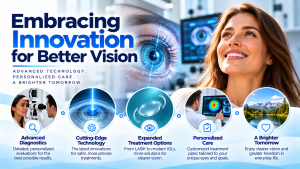
Embracing Innovation for Better Vision
Modern eye care is undergoing a significant transformation as digital tools and diagnostic accuracy redefine patient outcomes. Innovations like WaveLight® Plus allow surgeons to create
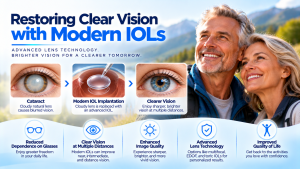
Restoring Clear Vision with Modern IOLs
An intraocular lens (IOL) is a tiny, artificial lens implanted in the eye to replace the natural lens when it becomes cloudy from cataracts. The
