
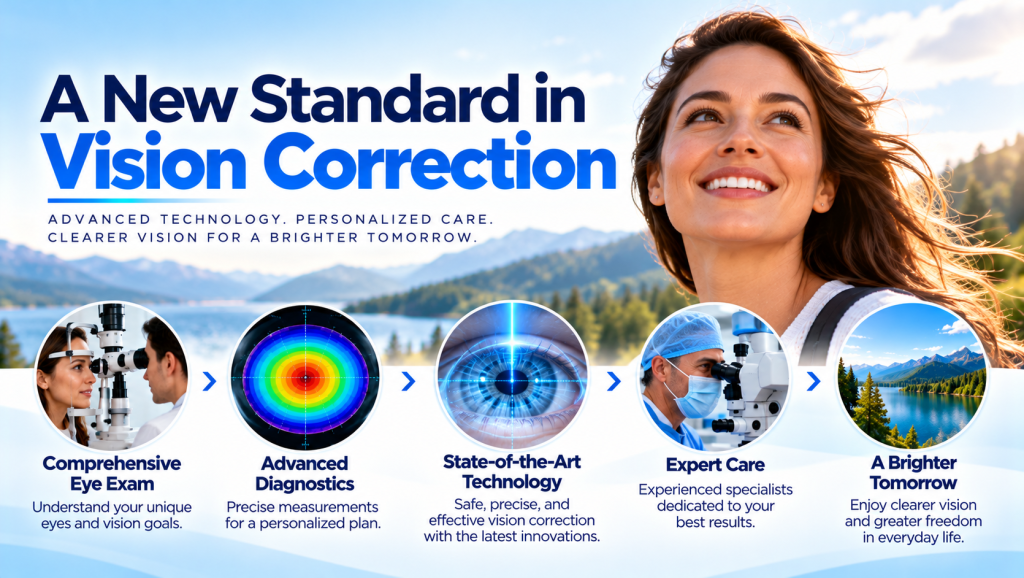
Bladeless LASIK represents a significant advancement in refractive surgery. Instead of a mechanical blade, a femtosecond laser creates the corneal flap with a level of precision that a microkeratome cannot match. This shift from blade to laser is the defining difference of the procedure.
The procedure corrects nearsightedness, farsightedness, and astigmatism by reshaping the cornea. The entire process takes under 15 minutes per eye, and most patients notice clearer vision within hours. Satisfaction rates are high, with over 96% of patients reporting satisfaction with their results.
At Diamond Vision, the bladeless approach uses the IntraLase femtosecond laser platform to deliver this precision. Combined with the experience of surgeons who have performed tens of thousands of procedures, this technology helps achieve consistent, reliable outcomes.
Bladeless LASIK | Femtosecond Laser Explained by Dr. Jay …
What Makes Bladeless LASIK Different
Bladeless LASIK, also referred to as all-laser LASIK, is an advanced vision correction method that replaces the traditional metal blade with a femtosecond laser to create the corneal flap. This laser-based approach offers a high degree of control, producing a flap with uniform thickness and a precise, smooth edge.
In traditional blade LASIK, a surgeon uses a handheld microkeratome with an oscillating metal blade to cut the flap. This mechanical step carries inherent risks, such as irregular incisions, partial flaps, or the rare but serious complication of a buttonhole. By contrast, bladeless LASIK creates a more consistent and thinner flap, preserving more corneal tissue and reducing the risk of flap-related issues.
The improved precision of the femtosecond laser also enables a more customized treatment plan. Surgeons can tailor the flap depth, size, and hinge position to each patient’s unique corneal anatomy, making the procedure suitable for individuals with thinner corneas or complex prescriptions who might not qualify for blade-based LASIK. This personalization, combined with advanced features such as real-time eye-tracking, contributes to better visual outcomes and a faster recovery.
Patients typically notice clearer vision within 24 to 48 hours and experience less discomfort compared to traditional LASIK. At Diamond Vision, our surgeons use this state-of-the-art bladeless technology to enhance safety and accuracy, helping you achieve sharper, more reliable vision with greater peace of mind.
Femto LASIK and All-Laser Precision
Femto LASIK is the technical name for bladeless LASIK, sometimes called all-laser LASIK. It describes a two-laser procedure that replaces the mechanical blade entirely. A femtosecond laser first creates an ultra-thin corneal flap. The flap is gently lifted, and an excimer laser reshapes the underlying corneal tissue to correct refractive errors like nearsightedness, farsightedness, and astigmatism.
This all-laser process offers distinct benefits over traditional LASIK. Because the femtosecond laser cuts a more uniform flap, the eye heals faster and with less discomfort. The precision of the laser also reduces the chance of irregularities that can cause nighttime glare and halos, leading to better night vision and contrast sensitivity. At Diamond Vision, we use advanced femtosecond platforms that create flaps tailored to each patient’s corneal anatomy, supporting stable, long-lasting results.
Who Is a Good Candidate for Bladeless LASIK
Bladeless LASIK is a highly effective vision correction option, but not everyone is an ideal candidate. A thorough evaluation helps determine whether the procedure is right for your eyes and overall health.
General Candidacy Requirements
- Age 18 or older, with a vision prescription that has been stable for at least one year.
- Healthy corneas free from conditions like keratoconus, and no active eye diseases such as glaucoma or cataracts.
- Sufficient corneal thickness to allow safe flap creation with the femtosecond laser.
- Good general health, with no autoimmune or immunodeficiency disorders that could impair healing.
What Disqualifies You for LASIK?
Several factors can disqualify you for LASIK. A fluctuating prescription, often due to pregnancy, nursing, diabetes, or certain medications, means your vision is not stable enough. Thin or irregular corneas and very large pupils raise the risk of complications such as halos or night-vision issues. Autoimmune diseases, immunodeficiency conditions, and medications like steroids or retinoic acid that can impair healing also make surgery unsafe.
Approximately 20% of people who undergo a pre-operative consultation are found not to meet the eligibility criteria. That is why a comprehensive evaluation with an experienced ophthalmologist is essential. At diamondvision.com, we provide free consultations to assess your candidacy thoroughly, using advanced diagnostic tools to measure corneal thickness, refractive error, and overall eye health. This ensures that every procedure is tailored to your unique anatomy and visual needs.
What to Expect on Surgery Day
Your preparation begins before you arrive. Soft contact lenses must be stopped at least one week beforehand, and rigid lenses two weeks prior, to let your cornea return to its natural shape. On the day itself, you are asked to eat lightly, skip makeup, perfume, and lotions, and arrange for someone to drive you home after the brief procedure.
Once you are comfortably positioned, numbing eye drops are applied so that you feel no pain. Many patients report only a sensation of mild pressure during the steps that follow. Using a femtosecond laser, the surgeon creates a thin, uniform corneal flap in just a few seconds. An excimer laser then reshapes the underlying corneal tissue to correct your refractive error, and the flap is gently repositioned to act as a natural bandage. At Diamond Vision, both eyes are typically treated in the same appointment, and many patients notice an improvement in their vision before they leave the clinic.
The entire visit lasts about 10 to 15 minutes per eye. You will go home with a pair of protective shields to wear while sleeping and a schedule of medicated eye drops to promote healing and prevent infection. The surgeon or a member of the care team will review all post-surgery instructions, including when to return for your first follow-up appointment, so you feel fully prepared for the recovery ahead.
Recovery: Fast and Generally Comfortable
One of the most appealing aspects of bladeless LASIK is the speed and comfort of recovery. Most patients experience a dramatic improvement in vision within the first 24 to 48 hours after the procedure, often noticing clearer sight before they even leave the clinic.
Initial discomfort is typically mild and short-lived. Common temporary symptoms include a feeling of dryness, slight light sensitivity, or intermittent blurriness. These effects usually resolve within the first few days and can be managed with prescribed lubricating eye drops.
Short-Term Recovery and Activity
Most patients can return to normal daily activities, such as reading, using a computer, and driving, within 24 to 48 hours. However, it is recommended to avoid strenuous exercise, swimming, and eye makeup for at least a week to prevent irritation or infection.
Full Stabilization Takes Time
While the initial visual improvement is rapid, complete stabilization of your vision takes longer. Mild fluctuations in clarity or occasional blurriness can persist for a few weeks as the cornea continues to heal. Full stabilization typically occurs over three to six months, during which your vision will continue to sharpen.
Surgeons at Diamond Vision emphasize the importance of attending all scheduled follow-up appointments during this period. These visits allow your doctor to monitor healing progress, manage any symptoms like dryness, and ensure you are on track for optimal, long-lasting results. Serious complications are rare, occurring in fewer than 1% of cases, and with proper care, the vast majority of patients report high satisfaction with their outcome.
Long-Term Outcomes and Satisfaction
Over 98% of patients achieve 20/20 vision or better after bladeless LASIK, with many seeing 20/16 or finer. The satisfaction rate for the procedure is approximately 95.4%, reflecting its reliability in correcting nearsightedness, farsightedness, and astigmatism.
The corneal correction performed during surgery is permanent. For most patients, distance vision remains stable for many years, with touch-ups rarely needed. However, natural age-related changes such as presbyopia (difficulty seeing up close) or cataracts can develop later in life, which are unrelated to the LASIK procedure itself.
At Diamond Vision, the combination of advanced femtosecond lasers and experienced surgeons helps deliver these strong, lasting outcomes. Regular eye exams are important to monitor for these age-related changes and maintain the quality of your vision correction.
Bladeless LASIK vs. SMILE and Other Options
While bladeless LASIK is a leading vision correction method, it is not the only advanced option available. Understanding the differences between these procedures helps you and your surgeon choose the approach that best fits your eyes and lifestyle.
Bladeless LASIK vs. SMILE
The primary difference between bladeless LASIK and SMILE lies in how the cornea is treated. Bladeless LASIK uses a femtosecond laser to create a thin corneal flap that is lifted so an excimer laser can reshape the underlying tissue. The flap is then replaced to heal naturally. SMILE is a flapless procedure: a small lens-shaped piece of tissue (a lenticule) is created inside the cornea and removed through a tiny incision. Because SMILE avoids creating a flap, it eliminates the risk of flap-related complications and is associated with a lower incidence of dry eye, making it a great option for active patients.
However, bladeless LASIK treats a wider range of prescriptions, including farsightedness, while SMILE is primarily approved for nearsightedness and mild astigmatism. At Diamond Vision, our experienced surgeons can evaluate your specific needs and recommend whether bladeless LASIK or an alternative approach is the right path for you.
Other Alternatives: PRK, Contoura, and EVO ICL
For patients who are not candidates for bladeless LASIK, several other effective options exist. PRK (Photorefractive Keratectomy) removes the cornea’s outer layer instead of creating a flap — it requires a longer recovery but is well-suited for people with thinner corneas or certain occupational requirements. Contoura (topography-guided LASIK) uses advanced mapping to achieve the sharpest possible vision. EVO ICL (Implantable Collamer Lens) places a biocompatible lens inside the eye without removing corneal tissue, making it ideal for patients with high degrees of nearsightedness or dry eye concerns.
The best way to determine the safest and most effective option for your eyes is through a detailed consultation with a qualified surgeon. Diamond Vision offers free consultations to discuss your candidacy, review your corneal health and prescription, and help you make an informed, personal choice.
Understanding the Investment
Bladeless LASIK costs typically range from $1,500 to $3,000 per eye. The final price depends on the surgeon’s experience, the specific laser technology used, the facility’s location, and your prescription complexity. While this range reflects national averages, many patients find the investment is manageable through several available options.
At Diamond Vision, we offer transparent pricing and a current $1,500 discount at our LasikATL location in Hapeville, GA. Flexible financing, including 0% APR for 2 years, CareCredit plans, and pre-tax Health Savings (HSA) or Flexible Spending (FSA) accounts, makes the procedure accessible for a wide range of budgets. We encourage you to schedule a free consultation to receive a personalized cost estimate and discuss the payment plan that fits your needs.
When weighing the upfront cost, it helps to consider the long-term savings. Eliminating ongoing expenses for glasses, contact lenses, solutions, and yearly eye exams can save patients tens of thousands of dollars over a lifetime. For many, bladeless LASIK is not just a vision correction procedure but a financially sound decision that pays for itself over time.
Why Choose Our Experienced Surgeons
Surgeon experience is one of the most important factors in achieving optimal LASIK outcomes. The American Academy of Ophthalmology notes that results are strongly influenced by the quality of the pre-operative evaluation and the skill of the surgical team. At Diamond Vision, Dr. Steven Stetson, a USAF-trained refractive surgeon, has personally performed over 80,000 surgeries and served as Chief of the USAF Academy Laser Eye Clinic.
Diamond Vision is a physician-led, surgeon-directed practice, not a corporate chain. Dr. Stetson evaluates each patient personally and performs every procedure himself, ensuring a level of surgical continuity and individualized attention that national LASIK chains cannot match. This approach combines the precision of bladeless LASIK with the judgment that comes from decades of experience.
Patient outcomes at Diamond Vision reflect this commitment to quality. Many patients report achieving 20/20 vision or better the day after surgery, and the practice offers free consultations to evaluate candidacy and answer questions. With flexible financing options, including a $1,200 New York Special and 0% financing plans, world-class care remains accessible to those seeking a permanent solution for clearer vision.
Take the Next Step Toward Clearer Vision
Bladeless LASIK combines femtosecond laser precision with customized treatment plans to deliver excellent visual outcomes and a rapid recovery. If you are ready to reduce your dependence on glasses or contacts, scheduling a free consultation is the first step.
Our patient-centered approach includes flexible financing options to make the procedure accessible, and our experienced surgeons are dedicated to your safety and satisfaction throughout your vision correction journey.
Contact Us
If you have more questions about LASIK procedures, get in touch with us.
Related Blogs

Understanding Your Vision Needs During Middle Age
As you enter your 40s, the natural aging process begins to affect the eye’s internal lens, which gradually loses the flexibility required to focus on
Embracing Innovation for Better Vision
Modern eye care is undergoing a significant transformation as digital tools and diagnostic accuracy redefine patient outcomes. Innovations like WaveLight® Plus allow surgeons to create
Restoring Clear Vision with Modern IOLs
An intraocular lens (IOL) is a tiny, artificial lens implanted in the eye to replace the natural lens when it becomes cloudy from cataracts. The
